Translate

Translate

Tuesday, July 30, 2013

Part III: War Erupts in Europe

Before we go into the details of the war erupting in Europe, let me familiarize you with some of the alliances between countries in Europe. First was the Treaty of London's Article 7 which agreed that the United Kingdom would protect Belgium's neutrality, basically protect it from any foreign invasion. The next was the Franco-Russian Military Alliance which was, well just what it sounds like, a military alliance between the French and Russians. This alliance along with the United Kingdom formed the Triple Entente which later expanded to form the Allies which included these countries plus the USA, Serbia, Italy, Japan, and others. The enemies of the Entente were the Triple Alliance which comprised Germany, Austria-Hungary, and Italy although Italy eventually left to join up with the Allies. The remaining powers of the Triple Alliance along with the Ottoman Empire formed the Central Powers.
The last alliance I'm going to mention is the dual alliance treaty between Austria-Hungary and Russia to protect each other if Russia attacks.
A map of Europe in 1914. Brown denotes the Triple Alliance and dark green denotes the Triple Entente.


So what happened?

Well as you may remember, Archduke Franz Ferdinand was assassinated by Serbian nationalists which made Austria-Hungary declare war on Serbia. Now, you may know that Russia and Serbia do have linguistic ties and they also had some economic and political ties that Austria was aware of. However, Austria didn't think that Russia would really get into a war with them. That was a huge miscalculation on the part of the Austrians. Russia did feel a need to protect Serbia and so, on the same day, Russia began

Author: Avi Goel
Remember to check out Part 2 if you haven't done so already!

Monday, July 29, 2013

Part II: Europe on the Brink of War

The date is June 28, 1914 in Sarajevo, then part of Austria-Hungary, but now the capital of Bosnia and Herzegovina. Archduke Franz Ferdinand, the heir to the throne of the Austro-Hungarian Empire is dead. What triggered it and what were the effects? In this post, you'll find out.
Archduke Franz Ferdinand

What triggered it?

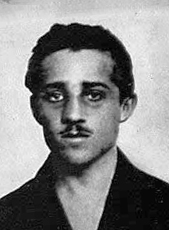
The cause of his death was assassination. The person who assassinated him was a man named Gavrilo Princip. However, I'm going to go back a few hours to a failed assassination attempt by Nedeljko Cabrinovic. He failed to assassinate Franz Ferdinand, and so, he jumped into a 4in deep river supposedly saying "I'm a Serb hero!" Anyway, let's go into the details of the actual assasination. Gavrilo Princip who at this point was pretty pessimistic about the chances of assassinating Franz Ferdinand was eating a sandwich at a local restaurant. Meanwhile, Franz Ferdinand drove by with his wife, and when Gavrilo Princip saw this, he took his gun, went outside, and shot the Archduke and his wife dead.

Gavrilo Princip

What were the effects?

Princip and Cabrinovic were Serbian nationalists. So it was only natural that Austria-Hungary would get into some conflict with Serbia. And they did. Serbia tried everything to avoid getting into a war with Austria, but nothing succeeded and so, on July 28, 1914, a month later, Austria declared war on Serbia.

Author: Avi Goel
Remember to check out Part 1 if you haven't done so already!
Remember to check out Part 3 after Parts 1 and 2!

Part I: Overview of Europe in 1914

In this 1st part, I hope to give you a sense of the map of Europe in 1914 as well as its political state. 1st of all here's a map just to give you a bit of sense of the political geography of Europe in 1914.
Correction: Turkey was known as the Ottoman Empire at the time. The empire at the time contained modern-day Turkey, Syria, Jordan, Lebanon, Israel, and parts of Saudi Arabia, Yemen, Qatar, and the UAE
Now, you might be thinking something like "Well Avi, I know most of these countries and you just told me about the Ottoman Empire, but what is this Austria-Hungary?" The answer is that the Austro-Hungarian Empire as it was called was an empire that existed in the late 19th and early 20th centuries in Europe and comprises modern-day Austria, Hungary, Czech Republic, Slovakia, Slovenia, Croatia, Bosnia and Herzegovina, and parts of Italy, Poland, Serbia,Montenegro,  Romania, and Ukraine. Also, you may be thinking something like "Well the U.K., France, Spain, Portugal, and most countries look similar to today, but how about Russia and Germany? They look awfully different" One reason was that Poland was at the time, split between Germany, Russia, and Austria, so they could expand there. Also, Russia had expanded to include Belarus, Ukraine, Georgia, Azerbaijan, and Finland among the countries they possessed.

Author: Avi Goel
Remember to check out Part 2!